

Introduction
Collagen, elastin, and hyaluronic acid diminish at roughly 1% per year after the mid‑20s, causing fine lines, loss of firmness, and skin laxity. Restoring these structural proteins is essential for maintaining youthful texture and elasticity. Modern collagen‑stimulating therapies—such as microneedling, radiofrequency, fractional lasers, PRP, and biostimulatory injectables—trigger controlled micro‑injuries or heat‑induced neocollagenesis, leading to gradual, long‑lasting skin tightening. Hudson Dermatology leverages this evidence‑based toolbox, offering FDA‑cleared devices (e.g., fractional CO₂, RF‑microneedling, Ultherapy) and expertly administered injectable stimulators (Sculptra®, Radiesse®). Their board‑certified team tailors multimodal protocols, combines treatments with sun protection habits, and monitors progress to maximize collagen regeneration and achieve natural‑looking rejuvenation.
Hudson Dermatology Professionals
 | ||
| Hudson Dermatology doctors | ||
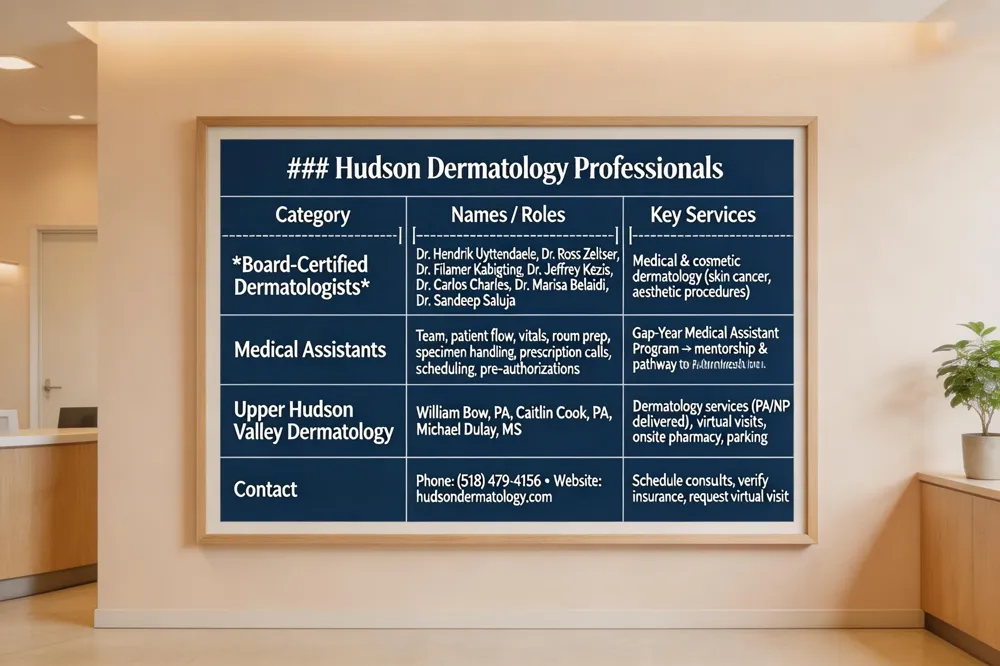
| Hudson Dermatology’s New York office is staffed by a team of board‑certified physicians, many with double board certifications and training from top universities and hospitals worldwide. The practice includes dermatologists such as Dr. Hendrik Uyttendaele, Dr. Ross Zeltser, Dr. Filamer Kabigting, Dr. Jeffrey Kezis, Dr. Carlos Charles, Dr. Marisa Belaidi, and Dr. Sandeep Saluja, among others. They provide both medical and cosmetic dermatology services—from skin cancer treatment to aesthetic procedures—and are supported by physician assistants and estheticians. Patients can schedule a consultation via the Hudson Dermatology website or by calling the office. |

Hudson Dermatology Medical Assistant Medical Assistants at Hudson Dermatology support patient flow and clinical care across its New York offices. Under physician supervision they escort patients, record histories, obtain vitals, and prepare exam rooms for biopsies, excisions, and Mohs surgery. They assist providers during exams, manage lab specimens, handle prescription calls, and coordinate scheduling, pre‑authorizations, and follow‑up of test results. The practice offers a Gap‑Year Medical Assistant Program that provides hands‑on training, mentorship from board‑certified dermatologists, and a pathway toward medical, PA, or nursing school admission. Applicants can apply through the careers page or email work@hudsondermatology.com.
Upper Hudson Dermatology Upper Hudson Valley Dermatology is located at 1547 Columbia Turnpike, Castleton, NY 12033. The clinic offers dermatology services delivered by physician assistants and nurse practitioners, including William Bow, PA, Caitlin Cook, PA, and Michael Dulay, MS. Patients can schedule appointments, verify insurance, and access virtual‑visit options through the online portal. The office provides convenient onsite parking and a pharmacy, and it is not physically attached to a hospital. Contact the clinic at (518) 479‑4156 for appointments or further information.
Fundamentals of Collagen Stimulation
 | |
| Biology of collagen decline | |
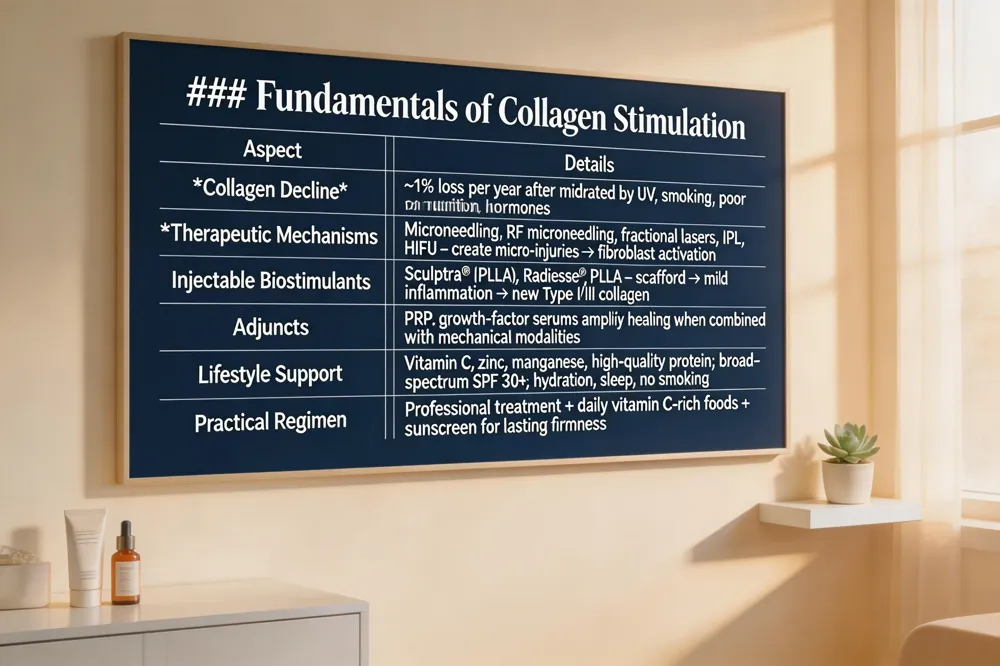
| Collagen, the primary structural protein of the dermis, diminishes at ~1 % per year after the mid‑20s. UV exposure, smoking, poor nutrition, and hormonal shifts accelerate this loss, leading to fine lines, reduced elasticity, and laxity. |

Mechanisms of collagen‑inducing therapies Procedures such as microneedling, RF microneedling, fractional lasers, IPL, and HIFU create controlled micro‑injuries or thermal zones that activate fibroblasts and trigger neocollagenesis. Injectable biostimulants ( Sculptra®, Radiesse®, PLLA act as scaffolds, provoking a mild inflammatory response that gradually produces new Type I/III collagen. PRP and growth‑factor‑rich serums amplify the healing cascade when used in conjunction with mechanical modalities.
Lifestyle and nutritional support A diet rich in vitamin C‑rich foods zinc, manganese, and high‑quality protein supplies the cofactors required for collagen synthesis. Broad‑spectrum SPF 30+ protects newly formed fibers from UV‑induced degradation. Regular hydration, adequate sleep, and avoidance of smoking further preserve fibroblast activity.
How to stimulate collagen production in skin Combine professional treatments (e.g., Sculptra, RF microneedling, low‑level red‑light therapy) with a collagen‑supportive regimen: vitamin C‑rich foods, antioxidant‑dense fruits, and daily sunscreen. Consistency maximizes long‑term firmness.
What is a collagen stimulating treatment? It is a minimally invasive procedure that initiates the skin’s wound‑healing response, prompting new collagen, elastin, and extracellular matrix formation. Unlike pure fillers, it builds gradual, natural rejuvenation over months.
Best collagen for anti‑aging Hydrolyzed powders high in Type I/III peptides (e.g., Vital Proteins Collagen Peptides) provide the most bio‑available support for skin elasticity and wrinkle reduction.
Best collagen for elderly A multi‑source blend containing Types I, II, and III (e.g., NOW Supplements Multi‑Collagen Protein) meets joint, bone, and skin needs in seniors.
Best collagen for saggy skin Oral Type I/III peptides paired with a topical retinol‑hyaluronic acid cream (e.g., Sungboon Deep Collagen Retinol Cream) offers synergistic tightening over 8‑12 weeks.
Laser‑Based Collagen Boosters
Ablative vs. Non‑Ablative Fractional Lasers
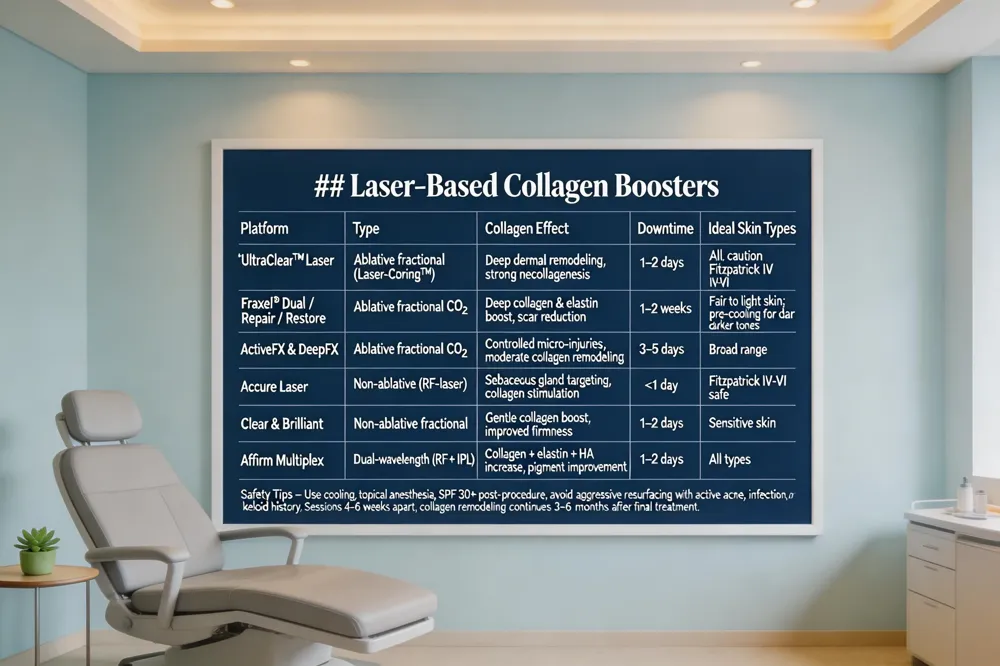
Ablative fractional lasers (e.g., CO₂, Er:YAG) vaporize columns of epidermis and heat the dermis, prompting a robust neocollagenesis that yields dramatic tightening but requires 1–2 weeks of recovery. Non‑ablative fractional lasers (e.g., IPL, 1550 nm Er:glass, UltraClear) create micro‑thermal zones without removing the surface, stimulating collagen with milder downtime (1–2 days). Both modalities improve fine lines, texture, and mild scarring, but the depth of injury and downtime differ.

Specific Laser Platforms and Their Collagen Effects
- UltraClear™ Laser with Laser‑Coring™ – creates microscopic treatment columns that remodel deep dermal collagen and elastin, delivering one of the strongest collagen‑boosting responses with minimal downtime.
- Fraxel® Dual / Fraxel® Repair / Restore – fractional CO₂ lasers that penetrate deep skin layers, reducing wrinkles, sun damage, and acne scarring while fostering long‑term collagen growth.
- ActiveFX & DeepFX – fractional CO₂ systems that induce controlled micro‑injuries for deep collagen remodeling; downtime is moderate (redness and peeling for several days).
- Accure Laser – targets sebaceous glands and deep dermal tissue, refining pores and texture while stimulating collagen with minimal recovery.
- Clear & Brilliant – a gentle fractional laser that creates thousands of microscopic zones, enhancing firmness and elasticity in 1–2 days.
- Affirm Multiplex – dual‑wavelength platform that boosts collagen, elastin, and hyaluronic acid while addressing pigmentation and texture.
Safety Considerations for Different Skin Types
- Darker Fitzpatrick skin (IV‑VI) is more prone to post‑inflammatory hyperpigmentation with ablative lasers; non‑ablative or RF‑based devices are safer choices.
- Proper cooling, topical anesthesia, and post‑procedure sunscreen (SPF 30+) are essential to minimize erythema, edema, and pigmentary changes.
- Patients with active infections, uncontrolled acne, or a history of keloids should avoid aggressive laser resurfacing until the skin stabilizes.
- Multiple sessions spaced 4–6 weeks apart are typical; collagen remodeling continues for 3–6 months after the final treatment.
Answering Common Questions
- Laser collagen treatment: Uses focused light energy to heat the dermis, creating controlled micro‑injuries that activate fibroblasts for new collagen and elastin production. Ablative lasers give dramatic tightening with longer downtime; non‑ablative lasers provide gentler, gradual improvement with minimal recovery.
- Best laser for collagen production: The most effective is the UltraClear™ Laser with Laser‑Coring™ technology for deep remodeling. Proven non‑ablative options include Fraxel® Dual and fractional CO₂ lasers (ActiveFX/DeepFX). Accure Laser is ideal for acne‑prone skin.
- What laser treatments stimulate collagen production and tighten the skin?: Ablative CO₂ and Er:YAG lasers vaporize epidermal columns and heat deeper tissue, triggering strong collagen remodeling and tightening. Fractional versions of these lasers and non‑ablative fractional lasers/ IPL also stimulate collagen with less downtime, offering a spectrum of tightening effects.
- Best collagen stimulation treatments: In‑office microneedling, fractional laser resurfacing (CO₂, Fraxel, IPL), RF devices (e.g., Morpheus8, Thermage), PRP injections, and chemical peels. Combining microneedling with PRP enhances results.
- Collagen stimulation treatments reviews: Injectable biostimulators such as Sculptra (poly‑L‑lactic acid) and Radiesse® (calcium hydroxylapatite) show high patient satisfaction, with collagen density increases of 60‑70 % and durability up to two years. Mild side‑effects (bruising, swelling) are common, and results are amplified when paired with a robust skincare regimen (retinoids, antioxidants, SPF).
Take‑away
Laser‑based collagen boosters offer a tailored approach to skin rejuvenation. Choose ablative lasers for aggressive tightening, non‑ablative fractional lasers for subtle, safe improvement, and always match the modality to your skin type and downtime preferences. Consistent post‑procedure sun protection and hydration are key to preserving newly formed collagen and achieving lasting, youthful results.
Microneedling, RF, and Integrated Devices
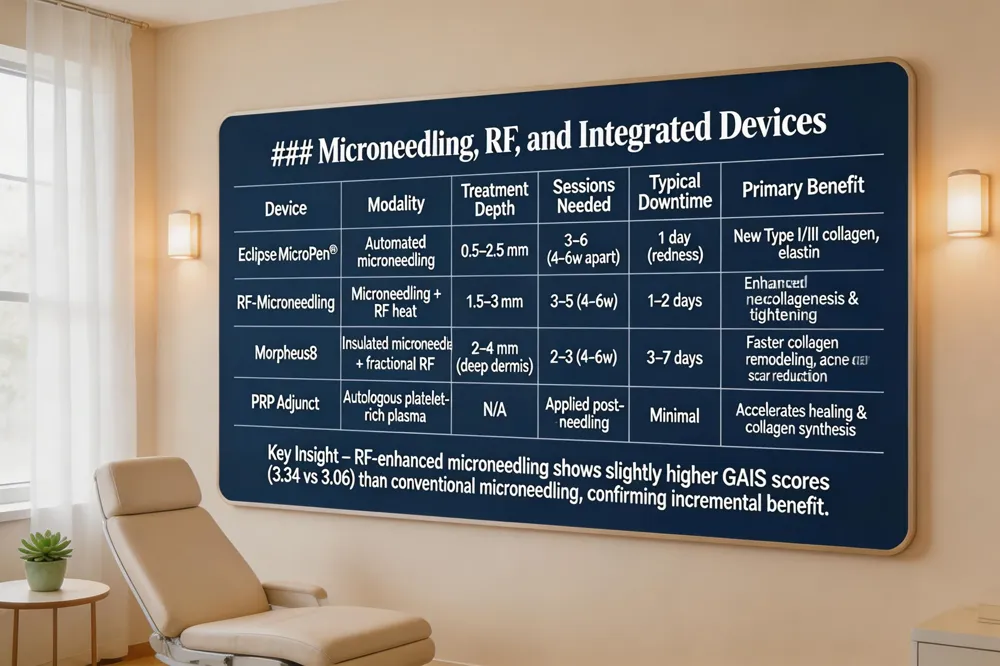 Microneedling remains a cornerstone of collagen induction. At Hudson Dermatology the automated Eclipse MicroPen® creates precise micro‑channels, stimulating fibroblasts to produce new type I/III collagen and elastin. A topical numbing cream precedes the 30‑60‑minute session, and patients may receive PRP afterward to accelerate healing. Visible improvement appears in 4‑6 weeks, with a typical series of three‑to‑six treatments spaced 4‑6 weeks apart; post‑care emphasizes sun protection and brief makeup avoidance.

The term “collagen induction therapy” (CIT) refers to the same micro‑injury principle. Adding radiofrequency (RF) to microneedling delivers focal heat, enhancing neocollagenesis and skin tightening. A review of 14 studies showed RF‑enhanced microneedling achieving slightly higher GAIS scores (average 3.34) than conventional microneedling (average 3.06), confirming its incremental benefit.
Morpheus8 integrates insulated microneedles with fractional RF, reaching deeper dermal layers than traditional pens. FDA‑cleared in 2024 for soft‑tissue contraction, it typically requires 2‑3 sessions spaced 4‑6 weeks apart and produces faster, more pronounced collagen remodeling for fine lines, acne scars, and laxity.
For optimal facial rejuvenation, a combined protocol of microneedling (or RF‑microneedling) with PRP or fractional laser resurfacing delivers synergistic collagen boost, improving texture, fine lines, and elasticity with minimal downtime. Patients with pronounced sagging benefit from oral hydrolyzed collagen II/III peptides—e.g., Vital Proteins Collagen Peptides—paired with a retinol‑rich topical cream to enhance dermal firmness over 8‑12 weeks.
Injectable Collagen Stimulators
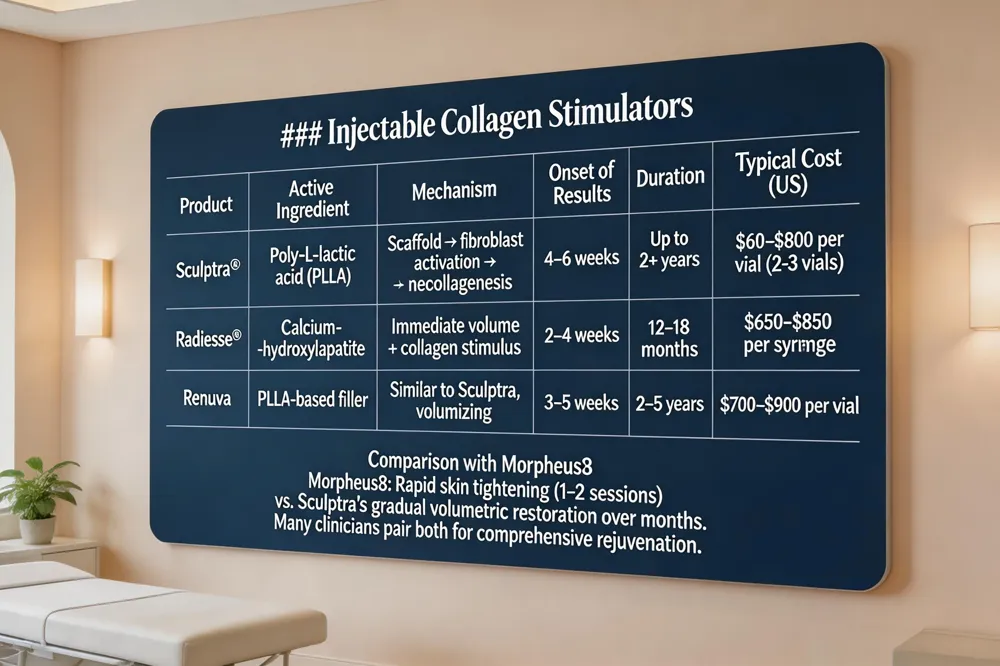 Collagen stimulator injections are minimally invasive, biostimulatory treatments—most commonly poly‑L‑lactic acid (Sculptra) or calcium‑hydroxylapatite (Radiesse)—that trigger the body’s own fibroblasts to lay down new type I and III collagen. After a series of carefully placed injections, the filler gradually breaks down, prompting neocollagenesis that smooths fine lines, improves laxity, and restores volume. Results typically begin within 4–6 weeks and can persist for up to two years, offering a natural‑looking lift without the immediate “filled” appearance of traditional hyaluronic‑acid fillers.

Dermatologists routinely perform these injections as part of facial rejuvenation protocols. They often combine them with microneedling, laser resurfacing, or PRP to amplify collagen synthesis, creating a synergistic anti‑aging regimen that addresses texture, tone, and volume.
Collagen stimulator for face – The most widely used facial collagen stimulator in the United States is Sculptra®. FDA‑approved for nasolabial folds, cheek and jawline contour loss, and deep wrinkles, it is administered in three sessions spaced four weeks apart. Patients notice smoother skin and a subtle “glow” that can last up to two years as new collagen builds.
How long do collagen‑stimulating injections last? – Semi‑permanent agents such as Sculptra, Radiesse, and Renuva provide durable outcomes, typically lasting 2–5 years, with some patients reporting benefits up to five years. The effect is gradual; collagen remodeling continues for months after the final injection, reducing the need for frequent touch‑ups compared with traditional HA fillers.
Comparisons – Sculptra vs. Morpheus8 – Morpheus8 (fractional radiofrequency microneedling) delivers immediate skin tightening and texture improvement by heating deep dermal layers, often producing visible results after 1–2 sessions. Sculptra works slower, stimulating collagen over 3–6 months for a progressive increase in volume and firmness that can last two years or more. When the goal is rapid surface refinement, Morpheus8 is preferred; for long‑term volumetric restoration, Sculptra is superior. Many clinicians pair both—using Morpheus8 for early tightening and Sculptra for lasting depth—to achieve comprehensive rejuvenation.
Duration and cost – A typical Sculptra protocol involves 2–3 sessions (4–6 weeks apart) with each vial costing $600–$800, totaling $1,800–$2,400. Morpheus8 usually requires 2–3 sessions at $1,500–$3,000 per treatment, reflecting higher equipment costs and deeper tissue remodeling. Both modalities have mild downtime (1–3 days for Sculptra, up to a week for Morpheus8) and are considered safe when performed by board‑certified dermatologists.
Key take‑away – Injectable collagen stimulators provide a long‑lasting, natural approach to facial rejuvenation, while RF‑microneedling devices like Morpheus8 offer faster, surface‑level tightening. Selecting the optimal treatment—or combining them—depends on patient goals, skin type, and desired timeline of results.
Adjunctive and At‑Home Collagen Strategies
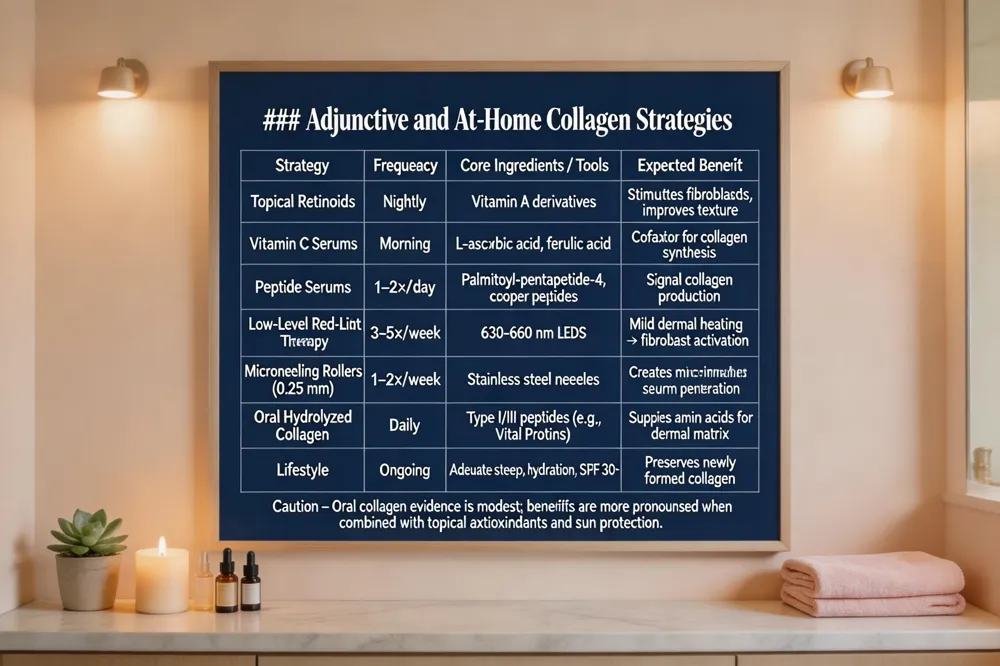 Topical retinoids[https://www.vogue.com/article/how-to-increase-collagen-skin) vitamin C[https://hudsondermatology.com/cosmetic/] and peptide serums act as biochemical cues that tell fibroblasts to ramp up collagen synthesis, making them the cornerstone of at‑home anti‑aging routines. Low‑level red‑light[https://solveclinics.com/best-collagen-treatment-for-face/] or laser devices, cleared by the FDA, deliver photons that penetrate the dermis and stimulate fibroblasts, providing a non‑invasive boost that can be used 3‑5 times weekly. Nutrition, supplements, and lifestyle also play a supporting role: a diet rich in vitamin C[https://hudsondermatology.com/cosmetic/], zinc, copper, and antioxidants supplies the raw materials for collagen, while adequate sleep, hydration, and daily broad‑spectrum SPF[https://www.vogue.com/article/how-to-increase-collagen-skin] protect newly formed fibers from UV‑induced breakdown.

Collagen treatment for face at home – Combine gentle microneedling[https://pmc.ncbi.nlm.nih.gov/articles/PMC11499218/] rollers with retinoid or vitamin C serums, and finish with a red‑light[https://solveclinics.com/best-collagen-treatment-for-face/] session to maximize fibroblast activation while keeping downtime minimal.
Why dermatologists hesitate on collagen supplements – High‑quality, independent trials are scarce; most studies are small, industry‑funded, and show only modest skin benefits. Oral collagen[https://pmc.ncbi.nlm.nih.gov/articles/PMC8824545/] is largely digested, and there is limited proof that intact peptides reach the skin in sufficient quantities to replace native collagen.
Can I take collagen while on HRT? – Yes. No known drug interactions exist between collagen peptides[https://pmc.ncbi.nlm.nih.gov/articles/PMC8824545/] and estrogen or progesterone therapies, but discuss any new supplement with your physician.
Best collagen for anti‑aging – Hydrolyzed powders rich in type I/III peptides (e.g., Vital Proteins, Great Lakes) that include vitamin C[https://hudsondermatology.com/cosmetic/] or hyaluronic acid provide the most evidence‑backed support for skin elasticity and wrinkle reduction.
Collagen stimulation treatments at home – Red‑light devices[https://solveclinics.com/best-collagen-treatment-for-face/], prescription‑grade retinoids[https://www.vogue.com/article/how-to-increase-collagen-skin] and vitamin C serums, and short‑needle microneedling[https://pmc.ncbi.nlm.nih.gov/articles/PMC11499218/] rollers together offer a safe, incremental approach to neocollagenesis when paired with diligent sun protection[https://www.vogue.com/article/how-to-increase-collagen-skin] and a nutrient‑dense lifestyle.
Patient Experience, Cost, and Practical Considerations
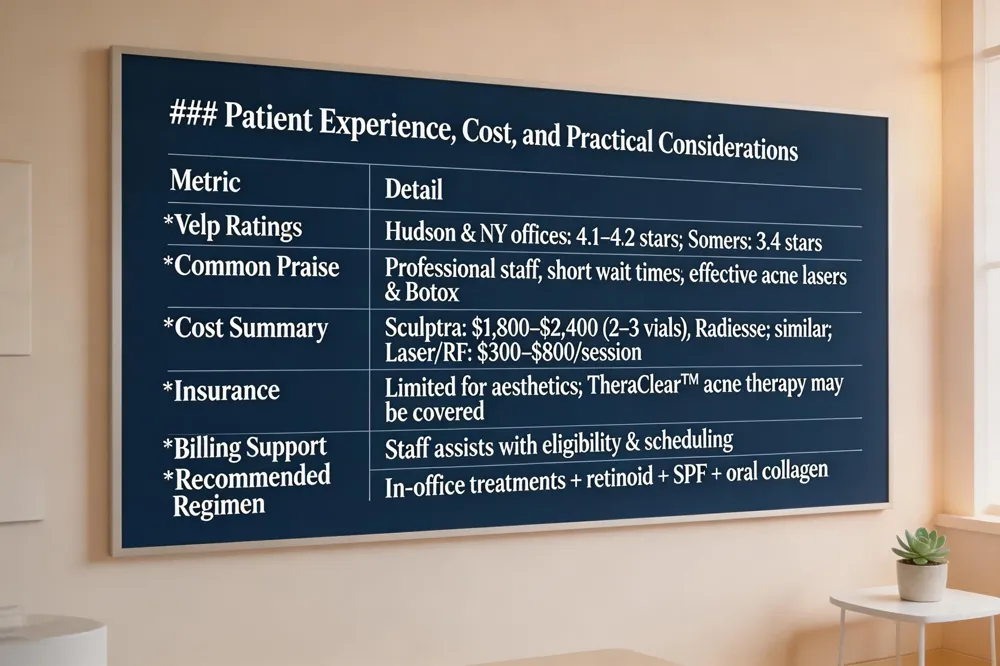 | |
| Hudson Dermatology consistently earns high marks, with Yelp ratings of 4.1–4.2 stars across its Hudson and New York offices. Reviewers praise professional staff, short wait times, and effective treatments ranging from acne lasers to Botox. The Somers location, rated 3.4 stars, also receives positive feedback for friendly clinicians such as Dr. Charles and esthetician Sharda Bhagwandin, with most patients stating they would return. |

Cost‑wise, biostimulatory collagen stimulators like Sculptra (PLLA) run $700‑$1,200 per vial, while calcium‑hydroxylapatite fillers (Radiesse) are priced similarly. Fractional laser and RF sessions typically cost $300‑$800 each, with multiple visits needed for optimal collagen remodeling.
Insurance coverage is limited for aesthetic procedures, but many plans do cover TheraClear™ acne therapy offered at Hudson Dermatology. The clinic’s billing staff confirms coverage eligibility and assists with scheduling. Combining these treatments with a daily retinoid and SPF regimen maximizes long‑term collagen health.
Conclusion
Collagen‑stimulating options range from minimally invasive device‑based therapies to injectable biostimulators. Microneedling (with or without RF) creates micro‑injuries that trigger neocollagenesis; fractional lasers (CO₂, Er:YAG, Fraxel, Clear & Brilliant) use micro‑thermal zones to remodel dermal fibers; radiofrequency and focused ultrasound (Ultherapy) heat deeper layers for immediate contraction and long‑term remodeling; injectable stimulators such as Sculptra (PLLA) and Radiesse (CaHA) act as scaffolds that gradually induce new collagen. Platelet‑rich plasma, chemical peels, retinoids, and peptide serums can augment these core modalities. Selecting a regimen should consider age, skin type, depth of laxity, downtime tolerance, and budget, ideally after a board‑certified dermatologist maps the patient’s specific concerns. Emerging trends—nanoneedling, stem‑cell‑enhanced PRP, gene‑therapy delivery, and AI‑guided treatment planning—promise deeper, more precise collagen induction with reduced side‑effects for lasting results and patient satisfaction.