

Introduction to EMFACE
EMFACE is a non‑invasive, FDA‑cleared facial rejuvenation system that merges synchronized radiofrequency (RF) heating with High‑Intensity Focused Electrical Stimulation (HIFES). The RF component raises dermal temperature to stimulate collagen and elastin production, while HIFES induces thousands of controlled muscle contractions, tightening underlying facial muscles and enhancing contour. Because the treatment is needle‑free, hands‑free and requires no anesthesia, it carries a low‑risk safety profile; common side effects are limited to brief warmth, mild redness, or transient tingling, all resolving within hours.
Understanding EMFACE: Technology and Benefits
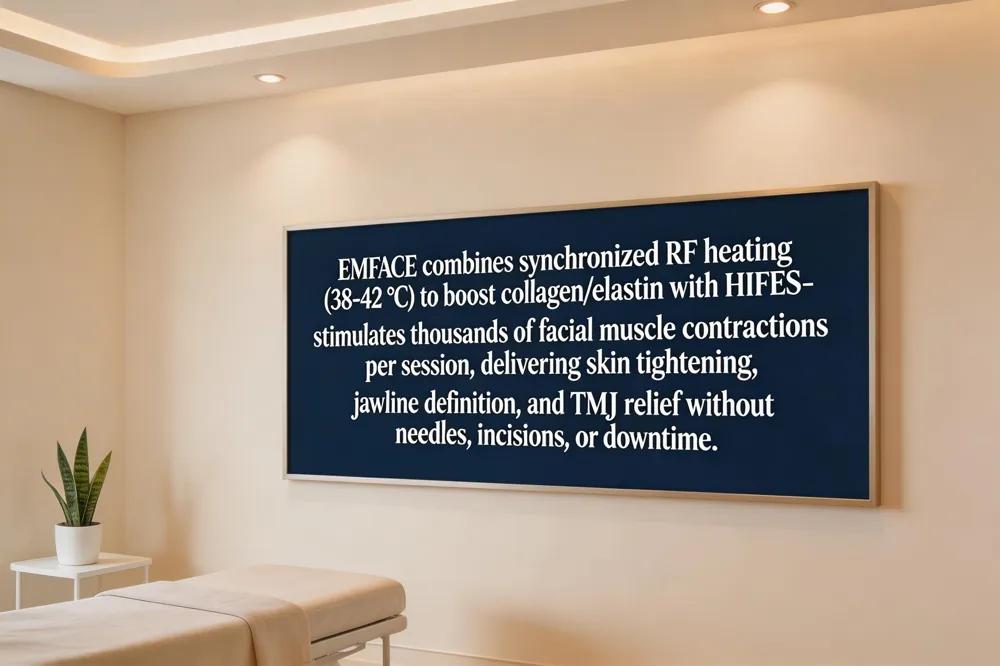 EMFACE integrates synchronized radiofrequency (RF) heating with High‑Intensity Focused Electrical Stimulation (HIFES). The RF component raises dermal temperature to 38‑42 °C, triggering collagen and elastin synthesis that improves skin texture and firmness. HIFES delivers thousands of controlled muscle contractions per session, re‑educating facial muscles, increasing tone, and providing a natural lift.
Because the system works on both skin and muscle, EMFACE offers dual functional relief: it treats temporomandibular joint (TMJ) dysfunction by reducing muscle spasms and improving mandibular range of motion, and it delivers aesthetic enhancement—smoother skin, tighter jawline, and reduced fine lines—without needles, incisions, or downtime.
Hudson Dermatology EMFACE services: Hudson Dermatology provides EMFACE as a non‑invasive facial remodeling treatment that combines RF energy with microneedling to stimulate collagen and elastin. A typical 20‑minute session tightens sagging skin on the face, neck, and jawline, diminishes fine lines, and yields a smoother, more youthful contour with only mild, short‑lived redness. Consultations determine suitability and a personalized protocol of four weekly sessions is common.
EMFACE treatment for TMJ: FDA‑cleared for TMJ dysfunction, EMFACE uses synchronized RF heating to improve local circulation and HIFES to generate deep, supramaximal muscle contractions. This combination balances jaw muscle activity, alleviates pain, reduces clicking and stiffness, and expands mandibular motion. Treatment is performed in‑office, typically requiring a series of sessions for optimal functional and aesthetic outcomes.
Pricing, Packages, and Accessibility
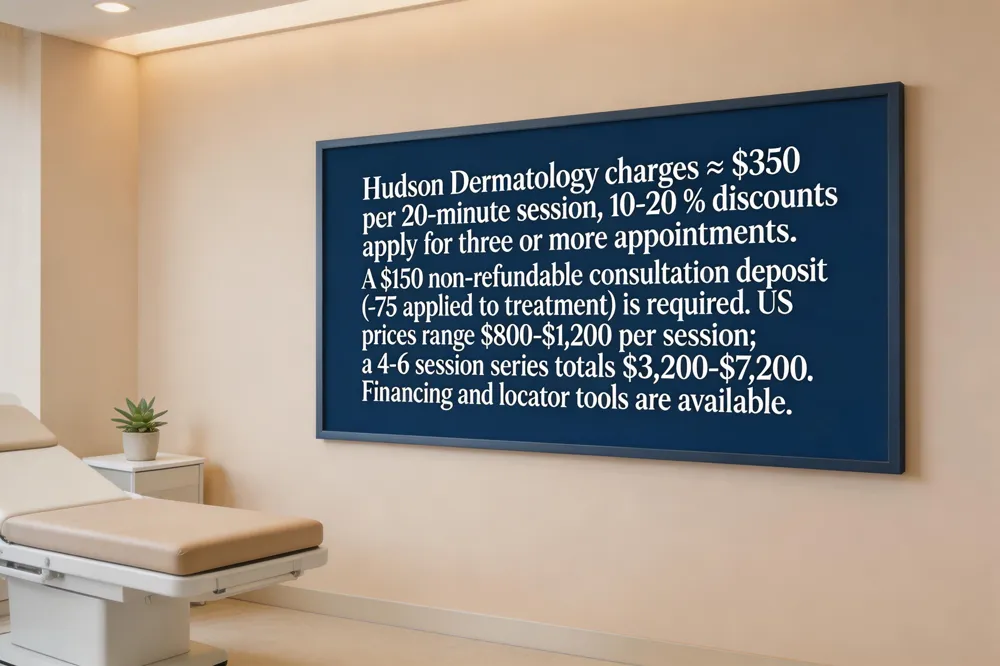 Hudson Dermatology offers EMFACE at roughly $350 per 20‑minute session, with package discounts of 10‑20 % when three or more appointments are booked. A $150 non‑refundable consultation deposit is required, $75 of which is applied toward the treatment cost. EMFACE treatments across the United States typically range from $800 to $1,200 per session; a full series of four to six sessions brings the total investment to $3,200–$7,200. Prices vary by provider, location, and any bundled services, and many clinics provide financing plans or payment schedules to spread the cost. To locate EMFACE near you, use Hudson Dermatology's online Provider Locator, search “EMFACE near me” on Google or maps, or call the practice directly at (555) 123‑4567. The staff can confirm the nearest certified office, discuss the recommended number of sessions, and arrange a consultation to begin your non‑surgical facelift journey.
What to Expect: Sessions, Results, and Timeline
 EMFACE treatment follows a standard protocol of four weekly, hands‑free sessions, each lasting about 20 minutes. Multiple applicators target the jawline, eyes, forehead and cheeks, delivering synchronized radio‑frequency heating and HIFES muscle stimulation. Patients typically begin to notice visible improvements within 6 to 12 weeks of starting the series, as collagen and elastin production rise and facial muscles become firmer. The first changes often appear after the second session, become more pronounced after the third, and peak 6‑12 weeks after the final appointment. Before‑and‑after galleries illustrate smoother skin, reduced fine lines, a lifted brow, fuller cheeks, and a more defined jawline. Results are natural‑looking, gradual, and last about a year, with maintenance sessions recommended to sustain tone and lift. Individual outcomes vary based on age, skin health, and adherence to the prescribed schedule, but most patients report a noticeable lift and increased confidence by the third month of therapy.
Safety, Side Effects, and At‑Home Care
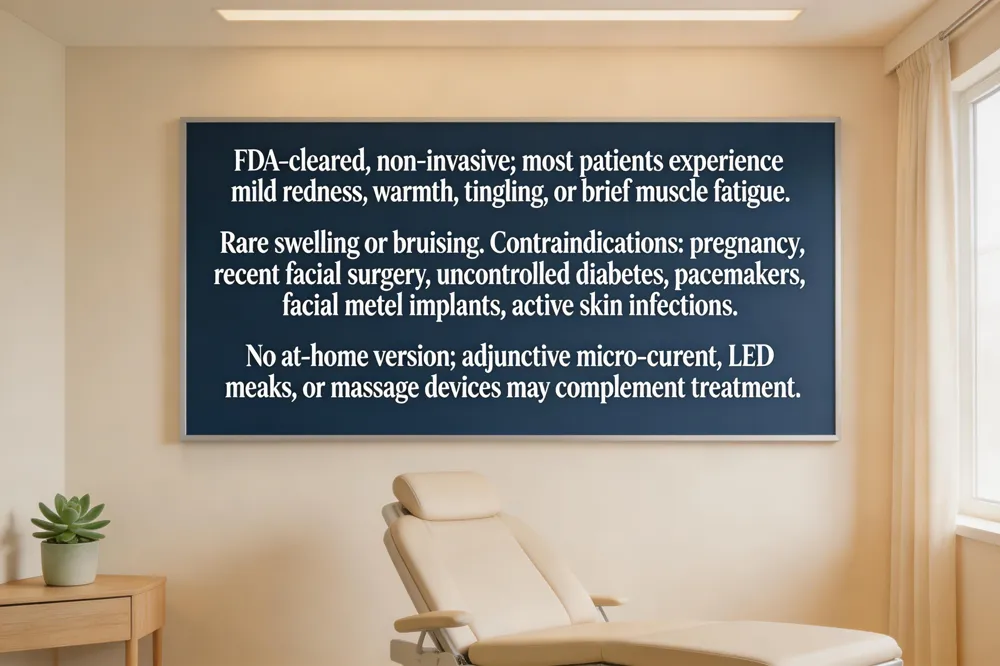 EMFACE is an FDA‑cleared, non‑invasive facial rejuvenation system that is generally well tolerated. Most patients experience only mild, temporary reactions such as brief redness, a warm or tingling sensation, and a fleeting feeling of muscle fatigue or soreness that resolves within a few hours to one day. Occasional swelling or faint bruising may occur in especially in areas delicate, reg, considered inf is. serious adverse events Ad rare, but individuals with implanted electronic devices, facial metal implants, or active skin infections should be screened before treatment.
Contraindications include pregnancy, recent facial surgery, uncontrolled diabetes, and the presence of pacemakers or other electronic implants. Patients with severe skin conditions or open wounds should postpone therapy until healed.
Because EMFACE is an in‑office procedure, there is no FDA‑approved at‑home version. To maintain results between visits, clinicians often recommend adjunctive at‑home tools such as micro‑current wands, LED light masks, or gentle facial massage devices. These devices can complement EMFACE but do not replace the proprietary RF‑HIFES technology. Always consult a qualified dermatologist before adding any electrical‑stimulation or light‑therapy products to your skincare routine.
Patient Experiences, Community Talk, and Celebrity Insights
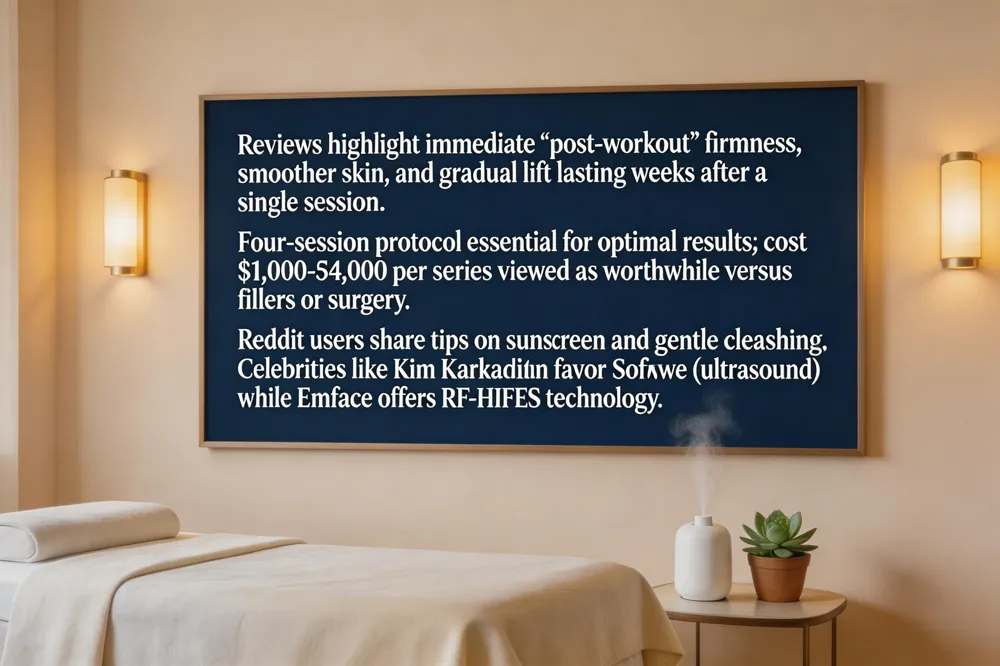 Emface reviews are overwhelmingly positive. Users report an immediate “post‑workout” firmness, smoother skin, and a subtle lift that can last weeks after a single 20‑minute session. The combination of HIFES muscle stimulation and RF collagen induction is praised for being painless, needle‑free, and downtime‑free. Most reviewers stress that optimal results require the standard four‑session protocol and periodic maintenance; some experience only modest change after the first treatment. Cost—often $1,000‑$4,000 for a full series—is cited as a consideration, yet many deem it worthwhile compared with fillers or surgical lifts.
On Reddit, discussion threads echo these sentiments. Community members highlight improvements in skin tone, reduced fine lines, and tighter under‑eye skin, but repeatedly caution that a series of sessions is essential for visible change. Users also share tips on post‑treatment care, such as gentle cleansing and sunscreen, to maximize collagen remodeling.
Kim Kardashian’s go‑to skin‑tightening procedure is Sofwave, an ultrasound‑based, non‑invasive treatment that stimulates collagen production. While Emface and Sofwave share the goal of non‑surgical rejuvenation, they differ in technology—EMFACE couples RF with HIFES muscle activation, whereas Sofwave relies solely on focused ultrasound. Both are popular among celebrities seeking natural‑looking, needle‑free lift.
Conclusion: EMFACE as a Modern Non‑Surgical Facelift
EMFACE delivers a dual‑action rejuvenation by heating the dermis with radiofrequency to trigger collagen and elastin synthesis while HIFES™ induces thousands of facial muscle contractions, increasing tone and lift. The procedure is needle‑free, non‑invasive and leaves only mild warmth or temporary redness, allowing patients to resume normal activities immediately and eliminating surgical downtime. At Hudson Dermatology, clinicians perform a thorough consultation, map each patient’s facial concerns, and tailor the number of sessions, applicator selection and RF power settings to achieve optimal, lasting results for each individual’s aesthetic goals and satisfaction.