

Overview of IPL and Skin Pigmentation
Intense Pulsed Light (IPL) delivers a broad spectrum of non‑laser light (500‑1200 nm) that is filtered to target melanin and hemoglobin. Selective photothermolysis heats pigment granules, fragmenting them for natural clearance and stimulating collagen remodeling. Sun‑induced hyperpigmentation (e.g., solar lentigines, freckles) originates from cumulative UV‑driven melanin overproduction and is generally epidermal, whereas melasma is a hormonally driven, often mixed epidermal‑dermal disorder that presents as symmetric brown‑gray patches and is more refractory to treatment. Because the depth, intensity, and cooling requirements differ for these conditions, individualized protocols—such as lower fluence and longer pulse duration for melasma, higher fluence for superficial sun spots, and pre‑/post‑treatment sun protection—are essential to maximize efficacy, minimize post‑inflammatory hyperpigmentation, and achieve durable results.
Differentiating Age Spots and Melasma
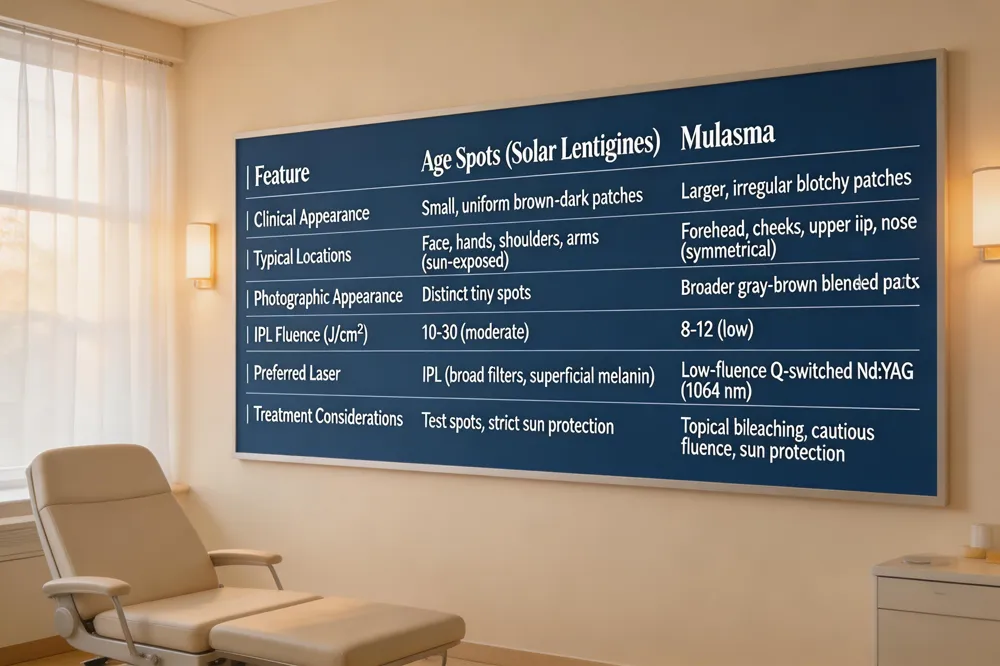 Age spots (solar lentigines) and melasma are both hyperpigmentation disorders, yet they differ markedly in clinical appearance, photographic patterns, and treatment considerations. Age spots appear as small, uniform, brown‑to‑dark patches that are usually isolated and found on chronically sun‑exposed areas such as the face, hands, shoulders, and the backs of the arms. In contrast, melasma presents as larger, irregularly shaped, blotchy patches that are often symmetrical and concentrated on the forehead, cheeks, upper lip, and sometimes the sides of the nose. Photographically, age spots look like distinct dots or tiny spots, while melasma looks like broader, often gray‑brown patches that blend into the surrounding skin. These visual differences guide therapeutic choices: age spots respond well to IPL with moderate fluence (10‑30 J/cm²) and broader filters that target superficial melanin, whereas melasma—especially deeper or mixed types—requires cautious, low‑fluence IPL (8‑12 J/cm²) or low‑energy Q‑switched Nd:YAG laser protocols, often combined with topical bleaching agents to minimize post‑inflammatory hyperpigmentation. Proper patient selection, test spots, and rigorous sun protection are essential for both conditions to achieve optimal outcomes.
Answer to "Age spots vs melasma pictures": Age spots (solar lentigines) appear as small, uniform, brown‑to‑dark patches that are usually isolated and most often found on sun‑exposed areas such as the face, hands, shoulders, and the backs of the arms. Melasma, by contrast, presents as larger, irregularly shaped, blotchy patches that are often symmetrical and concentrated on the forehead, cheeks, upper lip, and sometimes the sides of the nose. In photographs, age spots look like distinct dots or tiny spots, while melasma looks like broader, often gray‑brown patches that blend into the surrounding skin. Both conditions can be seen in before‑and‑after galleries, where laser or topical treatments show a gradual lightening of the pigmented areas. Comparing side‑by‑side images helps patients recognize which pattern they have and choose the appropriate dermatologic care.
IPL Treatment Basics and Risks
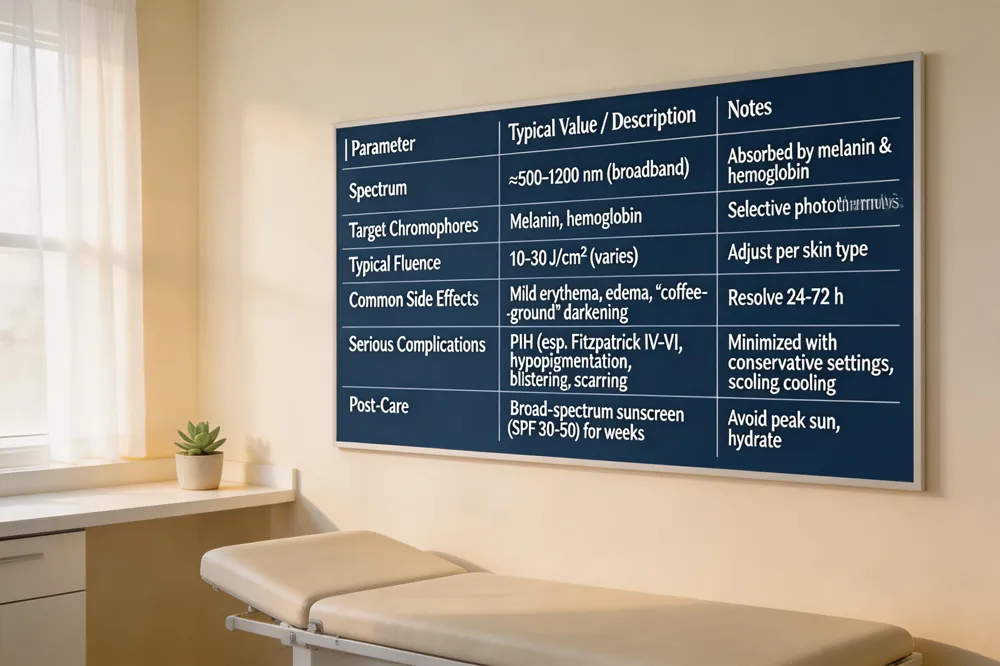 Intense Pulsed Light (IPL) emits a broadband spectrum (≈500‑1200 nm) that is absorbed by melanin and hemoglobin. Selective photothermolysis heats melanin granules, fragmenting pigment, and coagulates superficial vessels, leading to natural clearance and collagen remodeling. Typical side‑effects are mild erythema, edema, and a fleeting “coffee‑ground” darkening of treated spots (see coffee‑ground phase); these resolve within 24‑72 hours and require 1‑2 days of downtime. More significant complications can include post‑inflammatory hyperpigmentation (PIH), especially in Fitzpatrick IV‑VI skin, hypopigmentation, blistering, scarring, or prolonged pigment rebound if fluence is too high or cooling is insufficient. The skin becomes photosensitized, mandating strict broad‑spectrum sunscreen use for weeks after treatment. Proper patient selection, test spots, conservative settings, and diligent post‑care mitigate these risks and improve outcomes.
Treatment Protocols: Sessions, Costs, and Maintenance
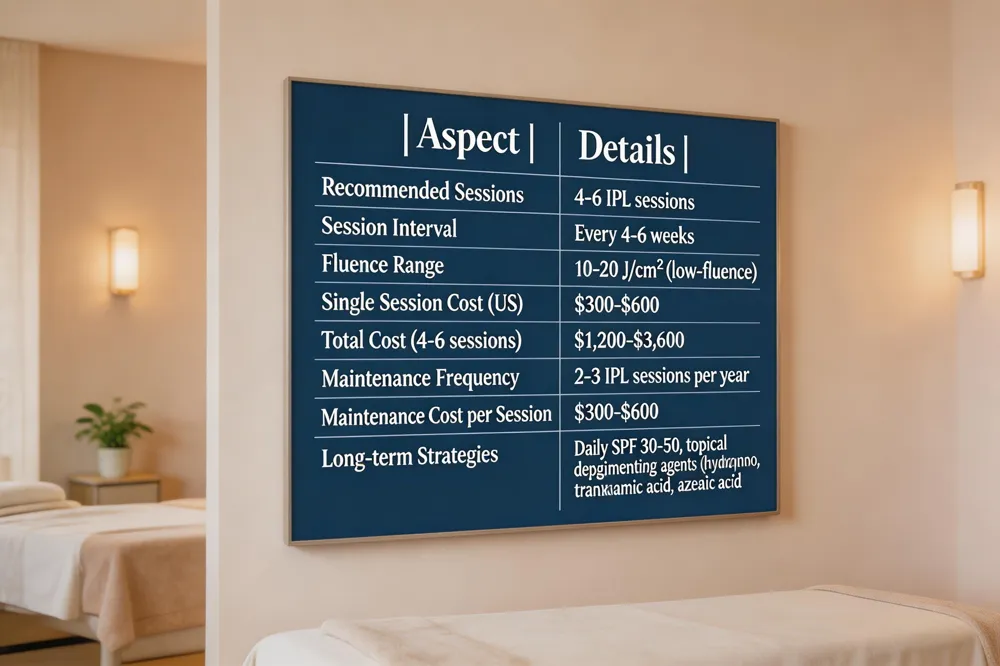 For melasma, clinicians typically recommend a series of 4–6 IPL sessions spaced every 4–6 weeks, using low‑fluence settings (10‑20 J/cm²) and cooling to minimize post‑inflammatory hyperpigmentation. The average price of a single facial IPL treatment in the United States ranges from $300 to $600, depending on geographic location, provider expertise, and the size of the treated area. After completing the initial course, sunspots and melasma can recur if UV exposure resumes; studies show that diligent daily broad‑spectrum sunscreen (SPF 30 – 50) and avoidance of peak sun hours are the most effective strategies to prevent new pigment formation. Long‑term maintenance typically involves 2–3 IPL sessions per year, combined with ongoing topical depigmenting agents (hydroquinone, tranexamic acid, azelaic acid) and strict photoprotection. This multimodal approach helps sustain results, reduces the risk of rebound hyperpigmentation, and supports overall skin health.
Expert Opinions and Preferred Laser Options
 Do dermatologists approve of IPL?
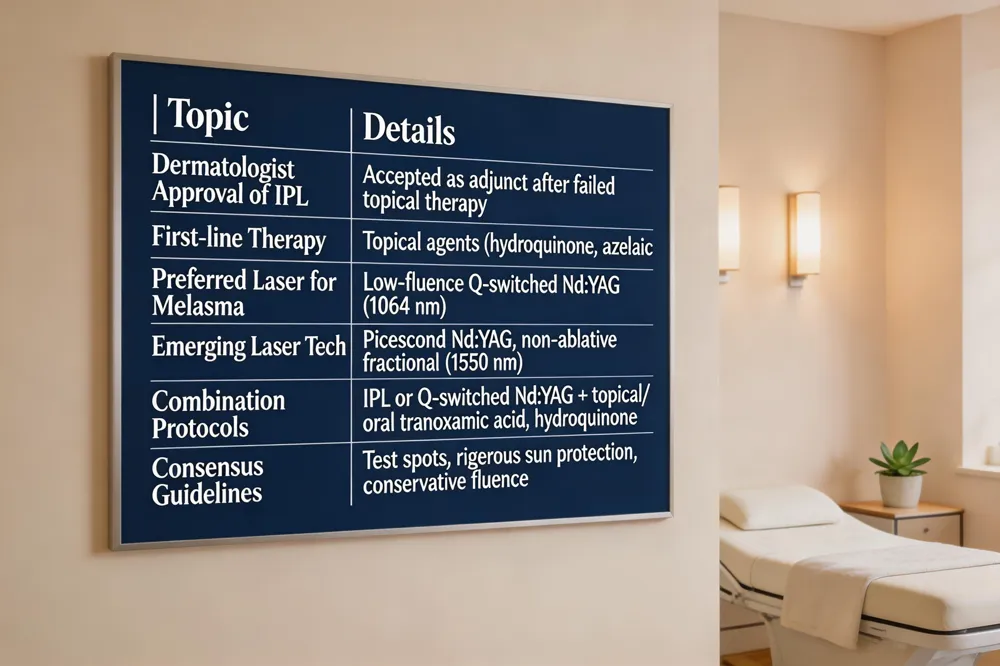
Board‑certified dermatologists acknowledge IPL’s versatility but reserve it for patients who have failed first‑line topical therapy. Consensus guidelines recommend IPL as an adjunct, not a primary, for melasma and stress rigorous pre‑treatment counseling, test spots, and sun protection to mitigate post‑inflammatory hyperpigmentation (PIH).
Best laser for melasma
The most widely endorsed laser is low‑fluence Q‑switched Nd:YAG (1064 nm), especially for Fitzpatrick IV‑VI skin, because it fragments melanosomes while preserving melanocytes. Picosecond Nd:YAG lasers are emerging for both epidermal and dermal melasma with reduced downtime. Non‑ablative fractional lasers (e.g., 1550 nm) are FDA‑approved for melasma when used at lower fluences and combined with topical hydroquinone.
Combination protocols that improve outcomes
Optimal results are achieved by pairing lasers (or IPL) with topical agents such as hydroquinone, tranexamic acid, or azelaic acid, and with oral tranexamic acid. Low‑fluence Q‑switched Nd:YAG combined with IPL or fractional CO₂ enhances efficacy and lowers PIH risk, making multimodal regimens the preferred approach for refractory melasma.
Hudson Dermatology: Services, Pricing, Reviews, and Microneedling
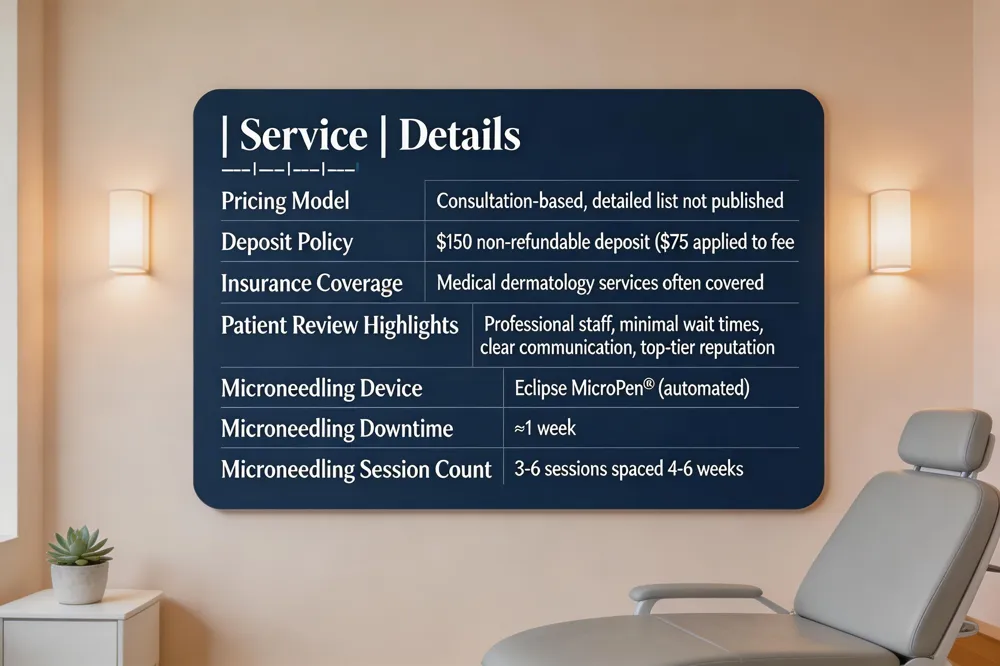 Hudson Dermatology does not publish detailed price lists online; instead, prospective patients are encouraged to schedule a consultation where costs are discussed. A non‑refundable $150 deposit secures cosmetic appointments, with $75 applied toward the treatment fee, while medical dermatology services may be covered by a wide range of insurance plans. Patient reviews consistently highlight the practice’s professionalism, courteous staff, minimal wait times, and clear communication from physicians such as Dr. Charles, Dr. Kezis, and Dr. Corrine Reilly. Reviewers often praise the modern, welcoming environment and the thorough explanations that put them at ease, rating the clinic as a top‑tier, trustworthy provider.
Microneedling at Hudson Dermatology is performed with the Eclipse MicroPen®, an automated device that creates microscopic channels to stimulate collagen and elastin production. The procedure includes a numbing cream, offers minimal downtime (≈1 week), and shows visible improvements in texture, tone, and fine lines within four to six weeks. For enhanced results, microneedling can be combined with platelet‑rich plasma (PRP), and a typical treatment plan involves 3‑6 sessions spaced 4‑6 weeks apart.
Key Takeaways and Next Steps
IPL effectively treats sun‑damage hyperpigmentation by fragmenting melanin, usually 3‑5 sessions spaced 4‑6 weeks. For melasma, IPL can improve superficial pigment but has higher PIH risk; it is best for refractory cases after topical therapy with low fluence settings. Proper patient selection, test spots, cooling, and strict sunscreen use before and after treatment are essential. Schedule a personalized consultation to determine the safest, most effective plan.