

Understanding EMFACE: Technology and Core Benefits
EMFACE merges synchronized radiofrequency (RF) heating with High‑Intensity Focused Electrical Stimulation (HIFES™). The RF component warms the dermis to 40‑45 °C, activating fibroblasts that produce new collagen and elastin, which tightens skin and improves texture. HIFES™ delivers controlled electrical pulses that cause deep facial muscle contractions, increasing muscle tone and providing an immediate lifting effect. Each treatment lasts about 20 minutes and is needle‑free, allowing patients to resume normal activities with minimal downtime—typically only mild redness or swelling that resolves within hours. EMFACE is ideal for individuals showing early‑to‑moderate aging signs such as sagging skin, fine lines, and loss of firmness, offering a non‑invasive alternative to surgical facelifts or injectables.
Clinical Outcomes, Patient Experiences, and Real‑World Reviews
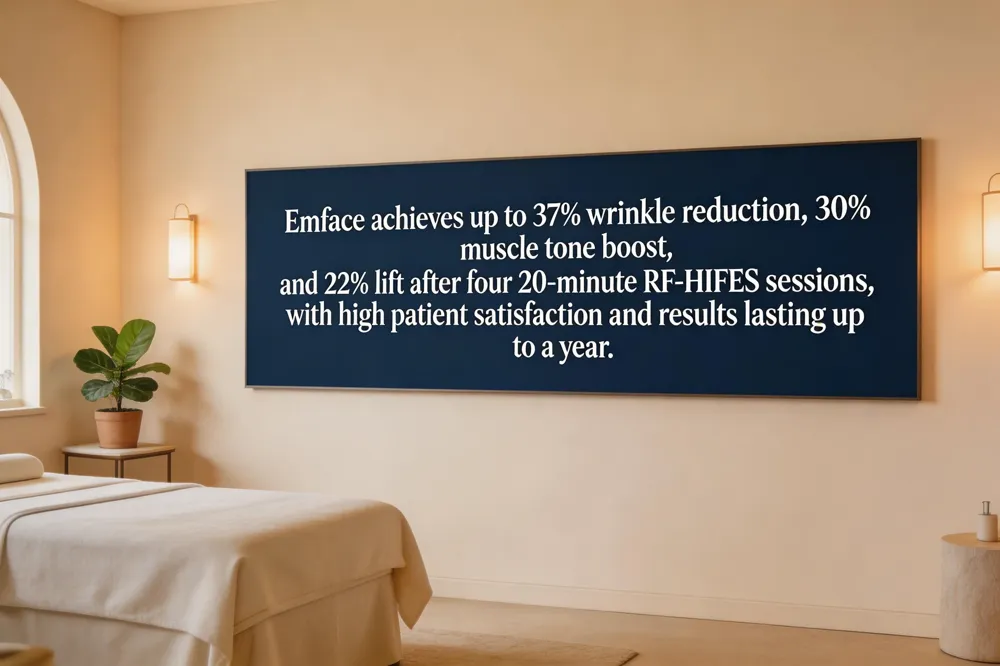 Emface delivers measurable gains in facial rejuvenation. Clinical data report a 37 % reduction in wrinkle depth, a 30 % increase in muscle tone, and a 22 % improvement in facial lift after a standard series of four 20‑minute RF‑HIFES sessions. Patients often notice a 27 % lift in facial contour within 30 days, with continued tightening for six to twelve weeks.
Before‑and‑after observations show a clear transformation: pre‑treatment skin typically displays mild sagging, fine lines, and a soft jawline. After four to six sessions, the dermis feels firmer, cheeks appear lifted, the jawline becomes more sculpted, and overall tone looks smoother. The changes are gradual, natural‑looking, and can last up to a year when proper after‑care is maintained.
Patient reviews consistently highlight tighter skin, reduced fine lines, and a smoother, more lifted contour. The needle‑free, painless nature of Emface earns high satisfaction scores; many users describe an immediate firmer sensation and lasting collagen‑driven firmness. While per‑session costs ($300‑$600) exceed some injectables, the non‑invasive approach and long‑term benefits are considered worth the investment.
In the broader market of non‑surgical facelifts, the most effective strategy combines deep‑tissue tightening (e.g., RF‑based devices like Emface) with volume restoration using hyaluronic‑acid fillers, creating a comprehensive “liquid facelift” that maximizes collagen remodeling while providing immediate lift and sustained firmness.
EMFACE Compared to Other Non‑Invasive Modalities
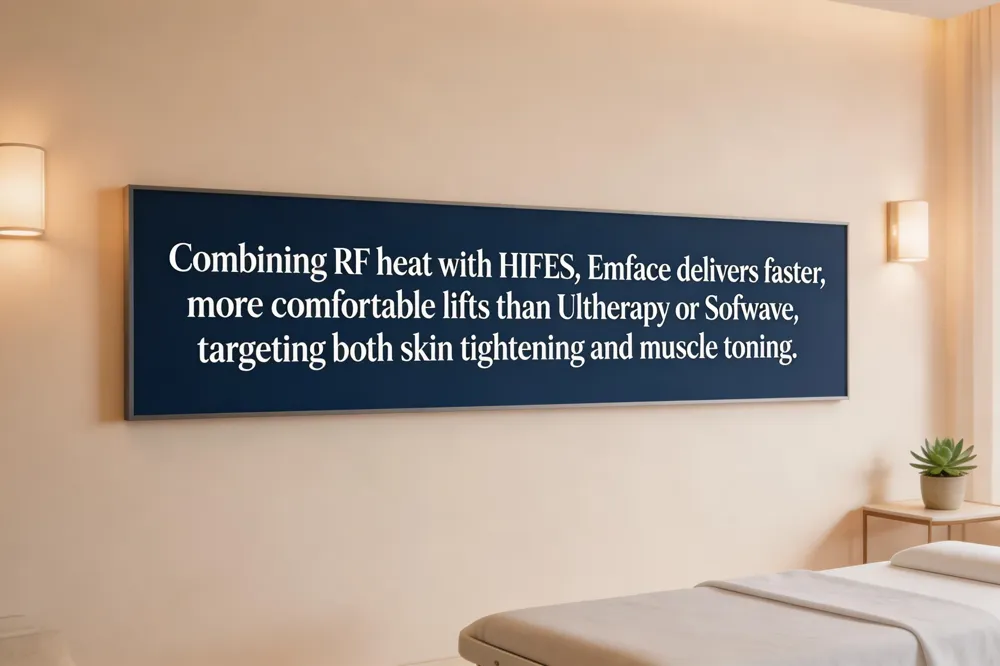 EMFACE distinguishes itself from other skin‑tightening technologies by pairing radio‑frequency (RF) heating with High‑Intensity Focused Electrical Stimulation (HIFES™). The RF component raises dermal temperature to 40‑45 °C, triggering collagen and elastin synthesis, while HIFES induces deep, voluntary‑like muscle contractions that lift and tone the face. In contrast, Ultherapy relies on micro‑focused ultrasound to target the SMAS layer, producing a slower, deeper lift that can last 1‑3 years but often feels more uncomfortable. Sofwave uses focused ultrasound at ~1.5 mm depth for collagen remodeling, excelling at brow and neck lift, yet it does not address muscle tone. Traditional RF tightening devices heat the skin alone, typically requiring more sessions to achieve comparable lift.
Cost‑wise, EMFACE sessions range $300‑$600, with a four‑session series costing $1,200‑$2,400. Ultherapy protocols are $2,500‑$4,000 for a full‑face/neck treatment, reflecting the deeper technology and larger treatment zones. Thermage and other RF devices fall between $1,500‑$3,000 per session.
Neck rejuvenation is not a primary indication for EMFACE; the treatment focuses on facial muscles and dermis. For neck laxity, Ultherapy, dedicated RF skin‑tightening devices, or RF‑microneedling are preferred because they reach the deeper SMAS layer required for noticeable lift.
Patient surveys consistently report higher satisfaction with EMFACE for early‑to‑moderate sagging. Users note a faster visible lift (4‑8 weeks) and greater comfort compared with Ultherapy, while traditional RF tightening often demands more sessions. Overall, EMFACE scores highest on comfort, downtime, and early results, making it a favored option for non‑surgical facial rejuvenation.
Cost, Availability, and Choosing a Provider
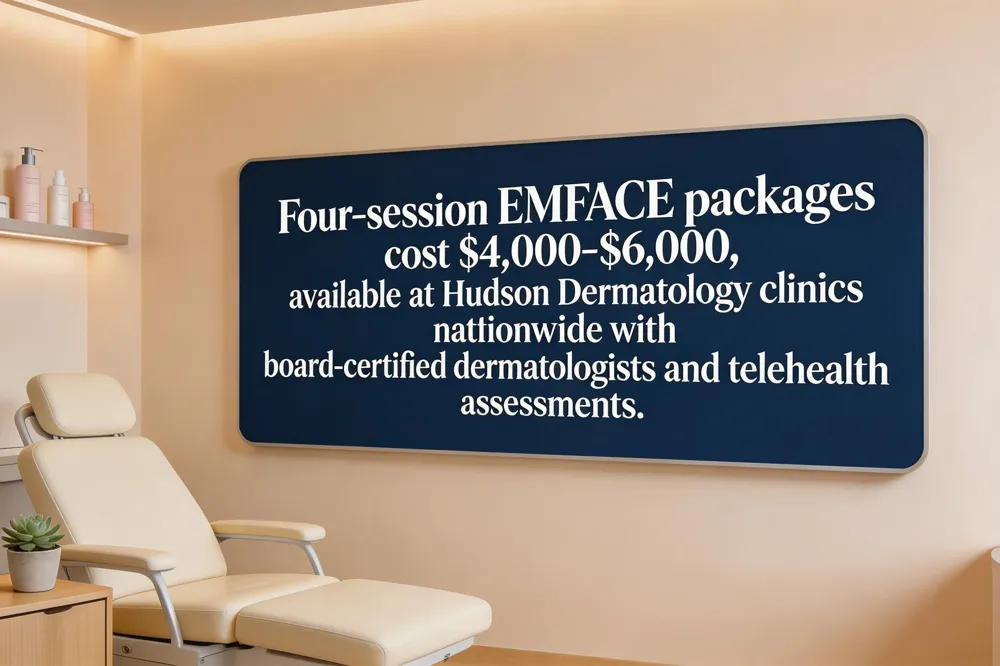 Non‑surgical face‑lift treatments vary widely in price. Radio‑frequency microneedling (e.g., Morpheus8) typically runs $1,500‑$3,500 per session, Ultherapy $2,500‑$5,000, and Sofwave $2,000‑$4,500. Full‑course EMFACE packages usually cost $4,000‑$6,000 for four 20‑minute sessions, with a $150 consultation fee that is partially credited toward treatment. National averages support this range, and clinics such as Advanced Dermatology list a four‑session series starting at $3,400.
Hudson Dermatology structures its EMFACE offering similarly: patients undergo an initial 20‑minute session followed by three additional treatments spaced 5‑10 days apart. The total cost aligns with the $4,000‑$6,000 benchmark, and a $150 non‑refundable deposit (partially applied) is required at consultation.
Providers are board‑certified dermatologists—including Dr. Dhaval Bhanusali, Dr. Aya Ahram, Dr. Chelsea Hoffman, and others—supported by experienced physician assistants and estheticians. Their expertise ensures safe delivery of EMFACE, which is FDA‑cleared for facial skin tightening and muscle toning.
Patients can access EMFACE at multiple Hudson Dermatology locations across the Hudson Valley, New York, Chicago, and Ohio, with telehealth visits available for initial skin assessments. In‑office sessions are needle‑free, require no downtime, and allow immediate return to normal activities. For those searching “EMFACE near me,” Hudson Dermatology offers convenient, local offices and a seamless booking process.
Safety Profile, Side Effects, and Patient Journey
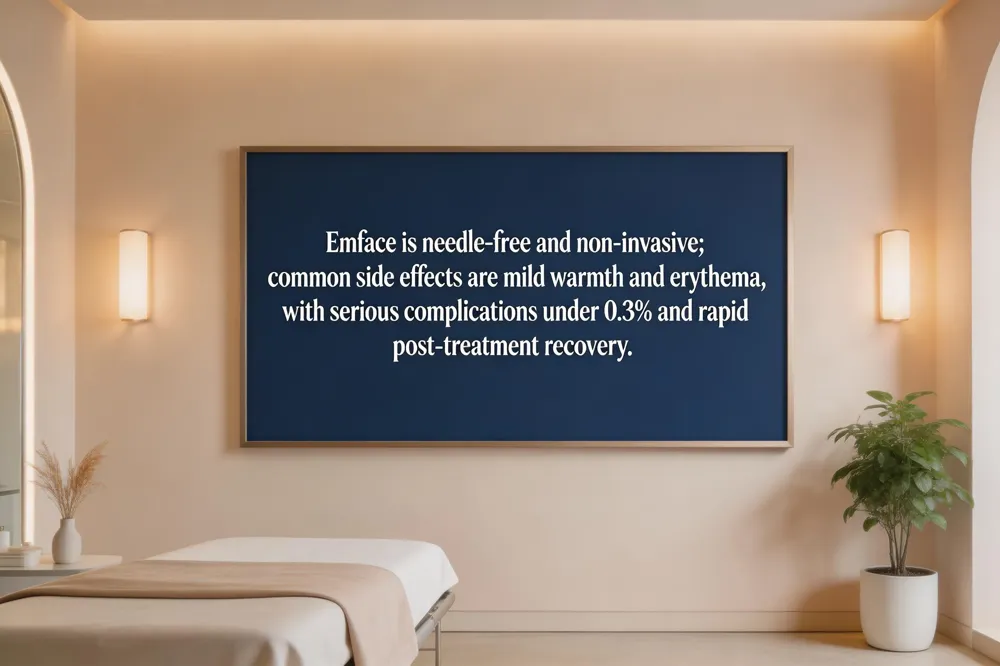 Emface is a needle‑free, non‑invasive facial rejuvenation system that delivers synchronized radiofrequency (RF) heat and high‑intensity focused electrical stimulation (HIFES™). Common short‑term adverse events are mild and transient: a warm sensation during treatment, slight erythema, and brief swelling or muscle fatigue that resolve within a few hours. Rarely, patients notice temporary bruising or mild puffiness, but serious complications occur in less than 0.3 % of cases. Long‑term safety is excellent; no lasting skin changes, nerve injury, or permanent pigment alteration have been reported when the procedure is performed by trained professionals and proper patient screening is applied.
Eye‑specific EMFACE protocol targets the periorbital area with focused RF heating and HIFES‑induced supramaximal contractions of the orbicularis oculi muscle. Clinical data show up to a 62 % reduction in dark circles, a 28 % decrease in crow’s feet, and noticeable tightening after four weekly 20‑minute sessions, with no downtime.
Contraindications include active skin infection, implanted electronic devices (e.g., pacemakers), pregnancy, and severe rosacea or eczema in the treatment zone. Post‑treatment care involves gentle cleansing, moisturization, and sunscreen; patients can resume normal activities immediately.
Efficacy: Studies report a 27 % improvement in facial lift and a 37 % reduction in wrinkle depth after a standard four‑session series, confirming that Emface does lift the face. For comparison, a surgical facelift (rhytidectomy) is traditionally credited with taking roughly ten years off a person’s appearance by tightening underlying muscles, removing excess skin, and repositioning facial fat.
Putting EMFACE Into Your Rejuvenation Plan
Emface delivers a non‑invasive lift by pairing radiofrequency heat with HIFES muscle stimulation, boosting collagen, elastin and facial tone. Clinical data show 30‑37% wrinkle reduction, 22‑30% lift improvement, and a 26% collagen increase after a 4‑session series. The procedure is needle‑free, painless, and has minimal downtime—only transient redness or mild swelling. Cost varies by region; a four‑session course at premier U.S. clinics ranges from $3,000 to $4,500, typically not covered by insurance. To begin, call Hudson Dermatology at (phone) or visit their website to book a prepaid consultation; a board‑certified dermatologist will assess skin type, goals, and schedule the 20‑minute sessions. Preserve results by using sunscreen, staying hydrated, avoiding smoking, and returning for maintenance treatments every 6‑12 months for lasting confidence.